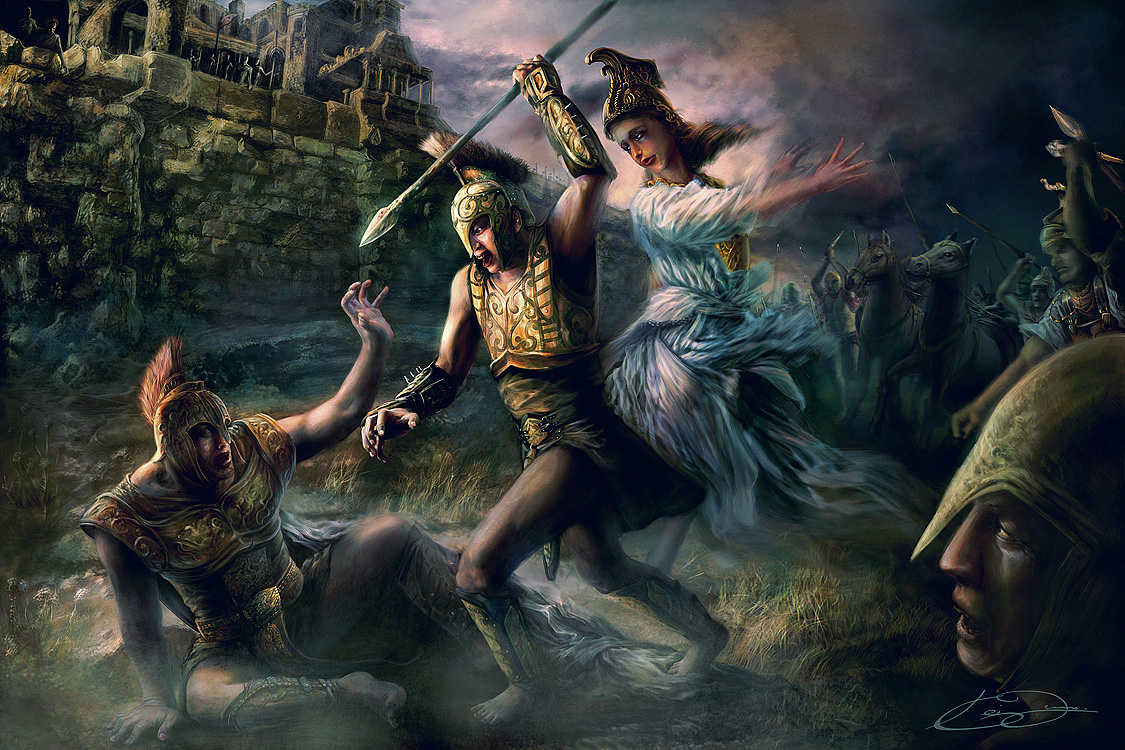
Two instances of divine intervention contribute to an extreme sense of suspense in these scenes. First, Zeus firmly manipulates the battle, from showering the Achaeans with blood to enabling Hector to become the first Trojan to cross the Achaean fortifications. The Achaeans recognize his presence and realize that in fighting the Trojans they pit themselves against the king of the gods. Diomedes even interprets Zeus’s acts of favoritism to mean that Zeus has singled out the Trojans for ultimate victory. At the same time, however, the epic frequently reminds us of a second case of divine plotting: according to soothsayers, Troy is fated to fall. Homer builds dramatic tension by juxtaposing this prophecy with vivid descriptions of the Achaeans’ sufferings and setbacks. He constantly tempts us with the expectation of Trojan defeat while dashing this prospect with endless examples of the Trojans’ success under Zeus’s partiality. Ultimately, we feel unable to trust either set of signs.

The frequent reappearance of Zeus also reminds the reader indirectly of Achilles, thus keeping our focus on The Iliad’s central conflict. Zeus first enters the war in response to Thetis’s prayers and now inflicts the same sort of damage upon the Achaeans that we are led to believe Achilles might easily inflict upon the Trojans if his rage were to abate. Zeus’s overpowering of the Achaeans makes Achilles’ absence all the more noticeable. Perhaps Homer worries that his audience, like the Achaeans, will miss Achilles—he seems to use the wounding of Machaon, whom Nestor whisks past Achilles’ tent toward medical aid, as an opportunity to make Achilles and, perhaps more important, Patroclus appear. The encounter between Nestor and Patroclus does more than present another glimpse of life behind the lines with Achilles and Patroclus; it also sheds some light on the difference in these two men’s attitudes. As the text gives information on the background of Patroclus, we begin to wonder whether Patroclus shares Achilles’ rage and whether he may wish to rejoin the fight despite his loyalty to his friend.
Here some quotations seen in books (11-17)
- Rage - Goddess, sing the rage of Peleus’ son Achilles,
murderous, doomed, that cost the Achaeans countless losses,
hurling down to the House of Death so many sturdy souls,
great fighters’ souls, but made their bodies carrion,
feasts for the dogs and birds,
and the will of Zeus was moving toward its end.
Begin, Muse, when the two first broke and clashed,
Agamemnon lord of men and brilliant Achilles.
- We everlasting gods . . . Ah what chilling blows
we suffer—thanks to our own conflicting wills—
whenever we show these mortal men some kindness.